
Chapter 8: Saint Felicia and the Courage to Choose Your Own Road
Why following your calling sometimes comes at a cost

The rocky descent from the Alto del Perdón demanded every bit of my attention. I didn't know that before the day was over, I would meet two women, separated by more than a thousand years, who had both made the same courageous choice: to stop living according to other people's expectations…
Join me as I retrace my pilgrimage to Santiago de Compostela, weaving together my own experiences with the stories of the saints, churches and traditions that have shaped this ancient route for centuries.
You can find all published chapters in the table of contents.
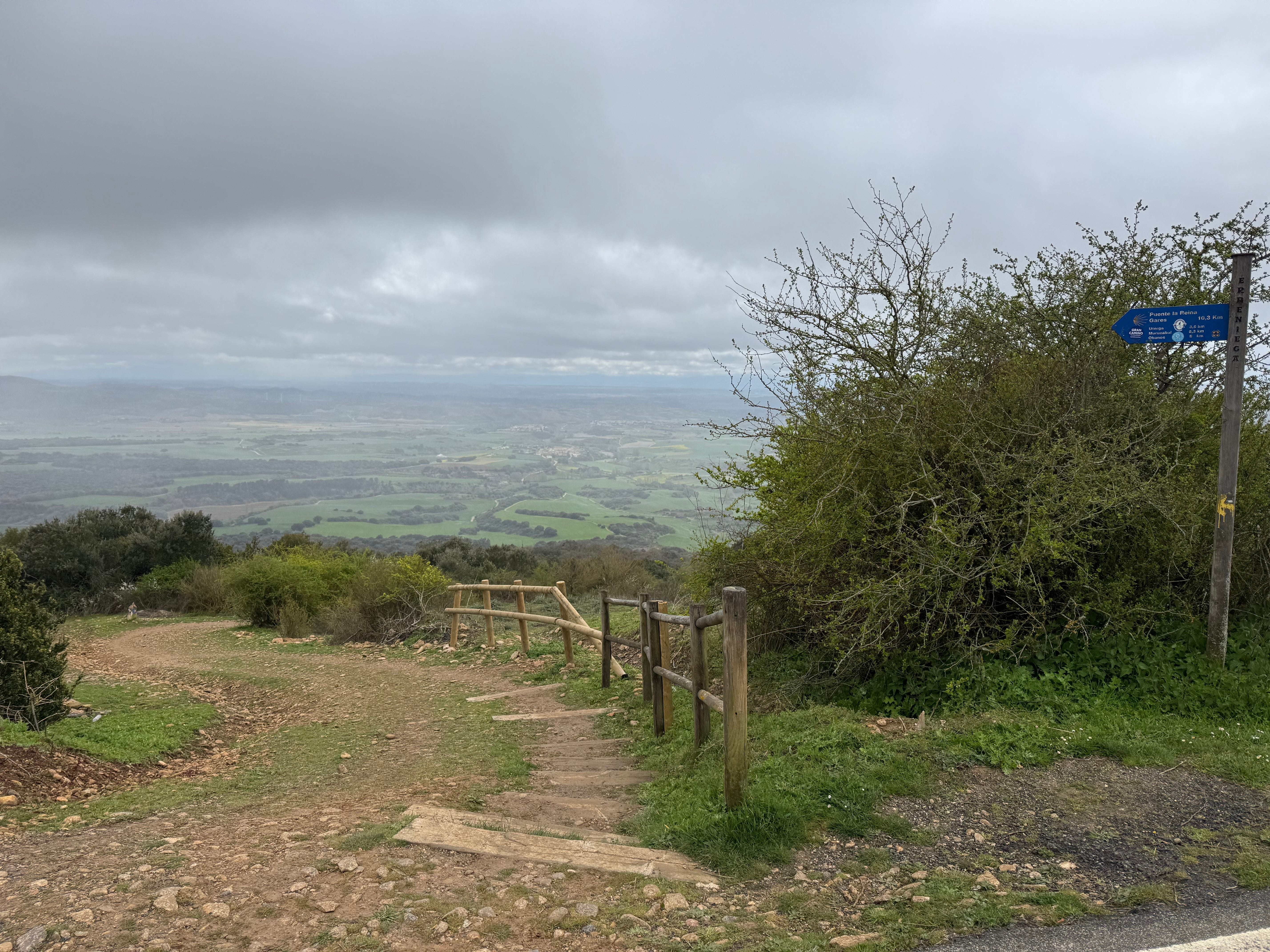
Reaching the summit of the Alto del Perdón had been exhilarating.
Getting down again was another matter entirely.
The path dropped steeply into the valley, its surface a jumble of loose stones polished smooth by centuries of feet. Every step required concentration. One careless movement could easily send you sliding several meters downhill.
It wasn’t a place for deep philosophical reflection.
It was a place to watch where you put your feet.
As I picked my way down the slope, I caught up with a small elderly woman making equally careful progress.
She greeted me cheerfully in hesitant English.
Recognizing her accent, I answered in Italian, and her face lit up.
“Oh! Sei italiano?”
“Not quite,” I laughed. “I’m Dutch.”
She smiled anyway.
For the next half hour, she hardly stopped talking.
She was seventy years old and walking the Camino entirely on her own.
She looked rather fragile, but appearances can be wonderfully deceptive on the Camino. Her pace was steady, her footing sure, and she tackled the rocky descent with a determination that would have put many younger pilgrims to shame.
She told me she had dreamed of walking to Santiago for years.
“But there was always something.”
Her family needed her.
There was work.
Responsibilities.
Someone always expected her to be somewhere else.
Finally, she had decided that if she didn’t go now, she might never go at all.
“So this is my time,” she said, as though she had finally given herself permission to say it aloud.
As we walked, she looked across the valley towards the green fields below.
“People spend too much of their lives looking at their phones,” she sighed. “They forget to look at the world.”
There was no bitterness in her voice.
More a sense that she had learned something rather late and hoped others might discover it sooner.
Eventually she asked what had brought me to the Camino.
When I explained that I was a Catholic priest recording a podcast series about the saints we encounter along the route, she fell silent for a moment.
Then she nodded thoughtfully.
“I wish more priests would walk the Camino.”
That wasn’t quite the response I had expected.
“It would be good for them,” she continued. “They would discover that the world is much bigger than the little part they usually see.”
She searched for the right words.
“They would listen more.”
I couldn’t help smiling.
It was clear she had met priests who preferred talking to listening.
The Camino has a way of placing everyone on equal footing. Priests, teachers, doctors, laborers, students. Out here, everyone becomes simply another pilgrim, carrying a backpack and hoping to reach the next village before nightfall.
Eventually she decided to stop for a rest.
“You keep going,” she said. “It’s your Camino. You don’t have to walk mine.”
We wished each other Buen Camino.
I walked on with a smile.
It had taken her seventy years to reach the Camino.
She had no intention of letting other people’s expectations determine her life any longer.
I hoped that if I reached that age, I would still possess that same mixture of courage and curiosity that had carried her this far.
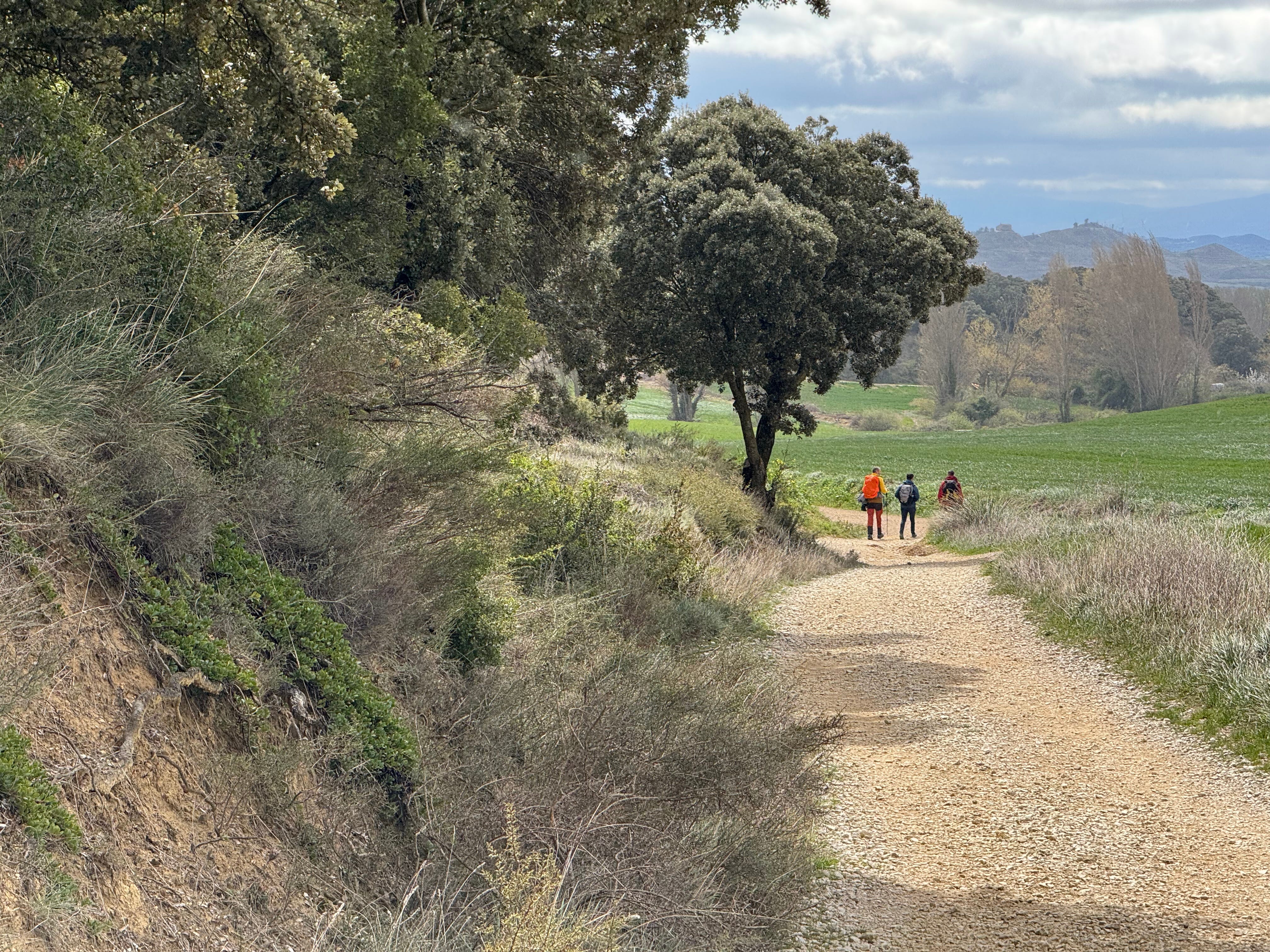
The path gradually became less steep.
The valley opened before me.
Fields of young wheat covered the hillsides in fresh shades of green. In a few months they would turn golden beneath the summer sun, but now they seemed to shimmer beneath the passing clouds. A cool breeze swept across the open countryside, carrying away the last warmth of the climb.
In the distance lay the small village of Uterga.
Before I reached it, a mountain biker overtook me at surprising speed.
“¡Buen Camino!”
He disappeared ahead before suddenly swerving off the path towards a small grove of holm oaks.
Curious, I followed more slowly.
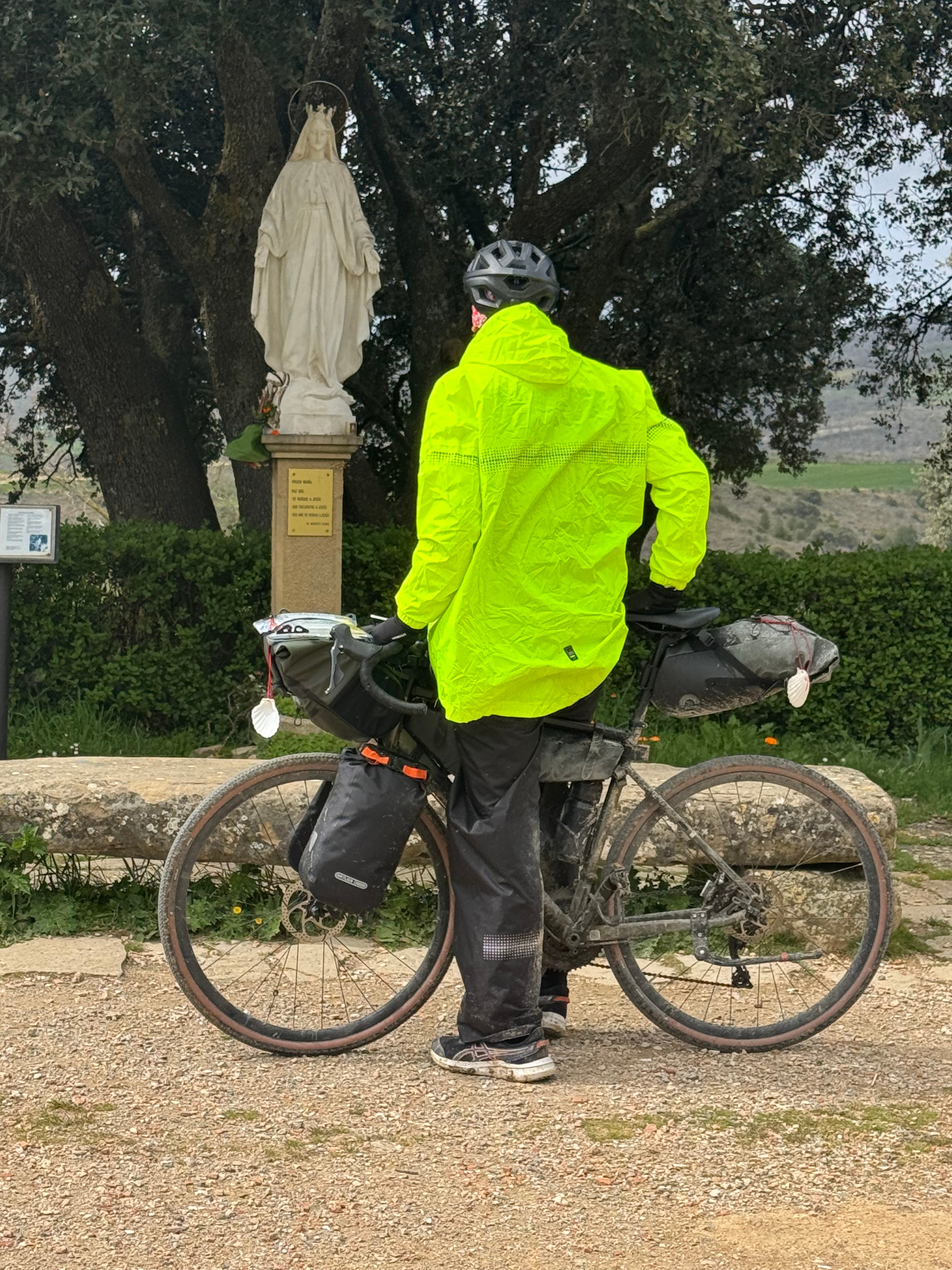
Hidden among the trees stood a simple white statue of the Virgin Mary.
The cyclist stood silently before the statue with his head bowed.
I stopped a respectful distance away.
Neither of us spoke.
I found myself wondering what he was entrusting to her.
Many people insist that today’s pilgrims are no longer interested in faith.
Walking the Camino, I had begun to doubt that easy conclusion.
People often describe themselves as “not religious.”
That doesn’t necessarily mean they have stopped searching.
Sometimes it simply means they haven’t found the words.
Later I learned why pilgrims still stop beneath those trees.
There is an old Camino story about a man named José Lucas Fernández.
He had just crossed the Alto del Perdón when his strength finally gave out. The climb had taken everything he had. He sat down beneath a cluster of holm oaks, convinced that his pilgrimage had come to an end.
As he rested there, a little girl appeared.
She asked him why he looked so discouraged.
“I can’t go on,” he admitted.
Then he asked her name.
“María,” she replied.
Before he could say another word, she was gone.
José never forgot that encounter.
Whether he had met an ordinary village girl or the Virgin Mary herself, he never claimed to know. But he always believed that, at the moment he heard her name, something changed. His strength returned. He got up, continued towards Santiago, and completed not just that pilgrimage but many more in the years that followed.
Out of gratitude, he donated the white statue that now stands among the trees. It marks the place where, according to tradition, he met María.
I looked again at the cyclist standing silently before her.
Perhaps he knew the story.
Perhaps not.
Either way, it seemed to me that he had come looking for exactly the same thing José had found there all those years ago.
A little encouragement to keep going.
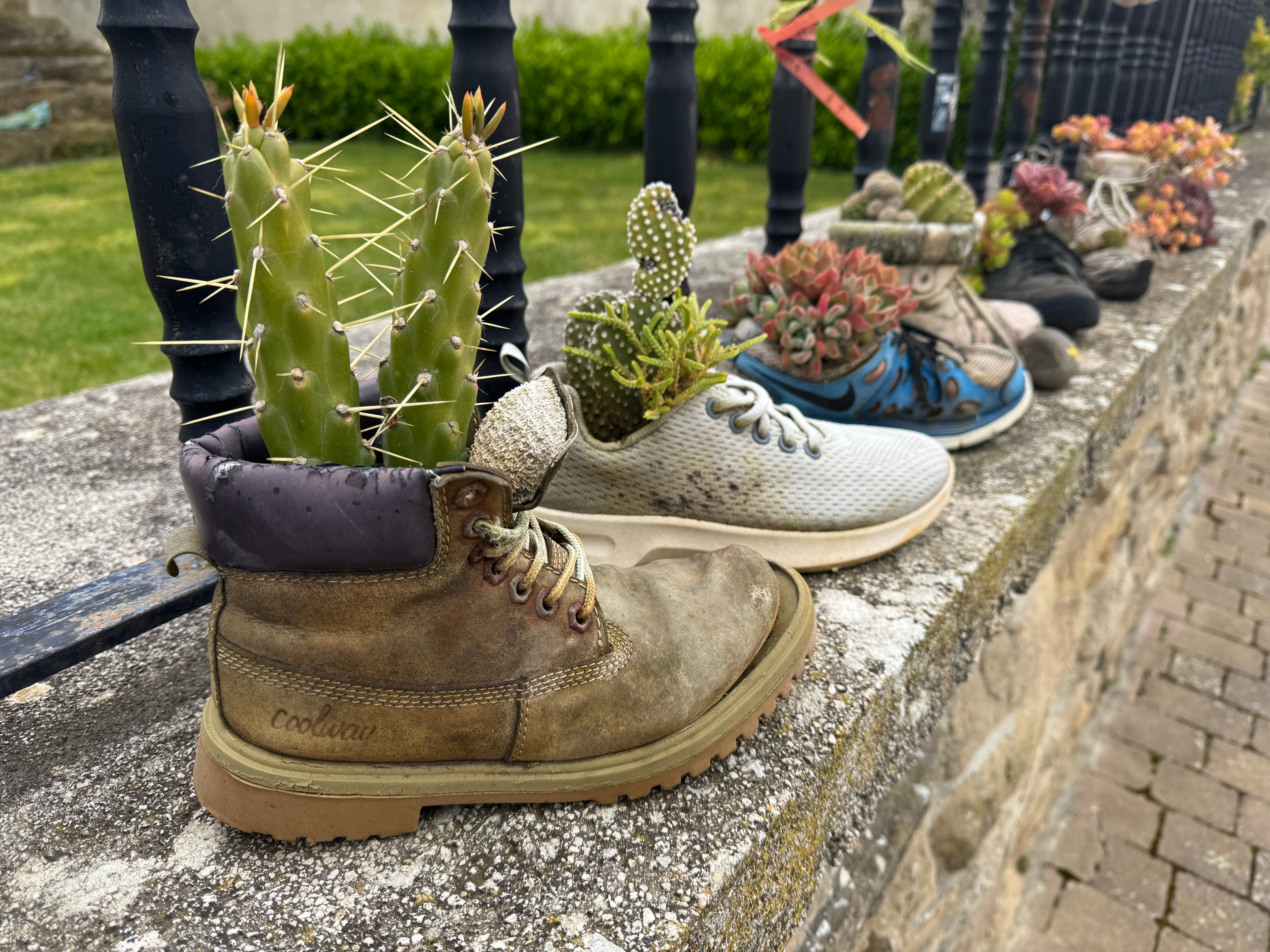
As I entered the village, something made me stop.
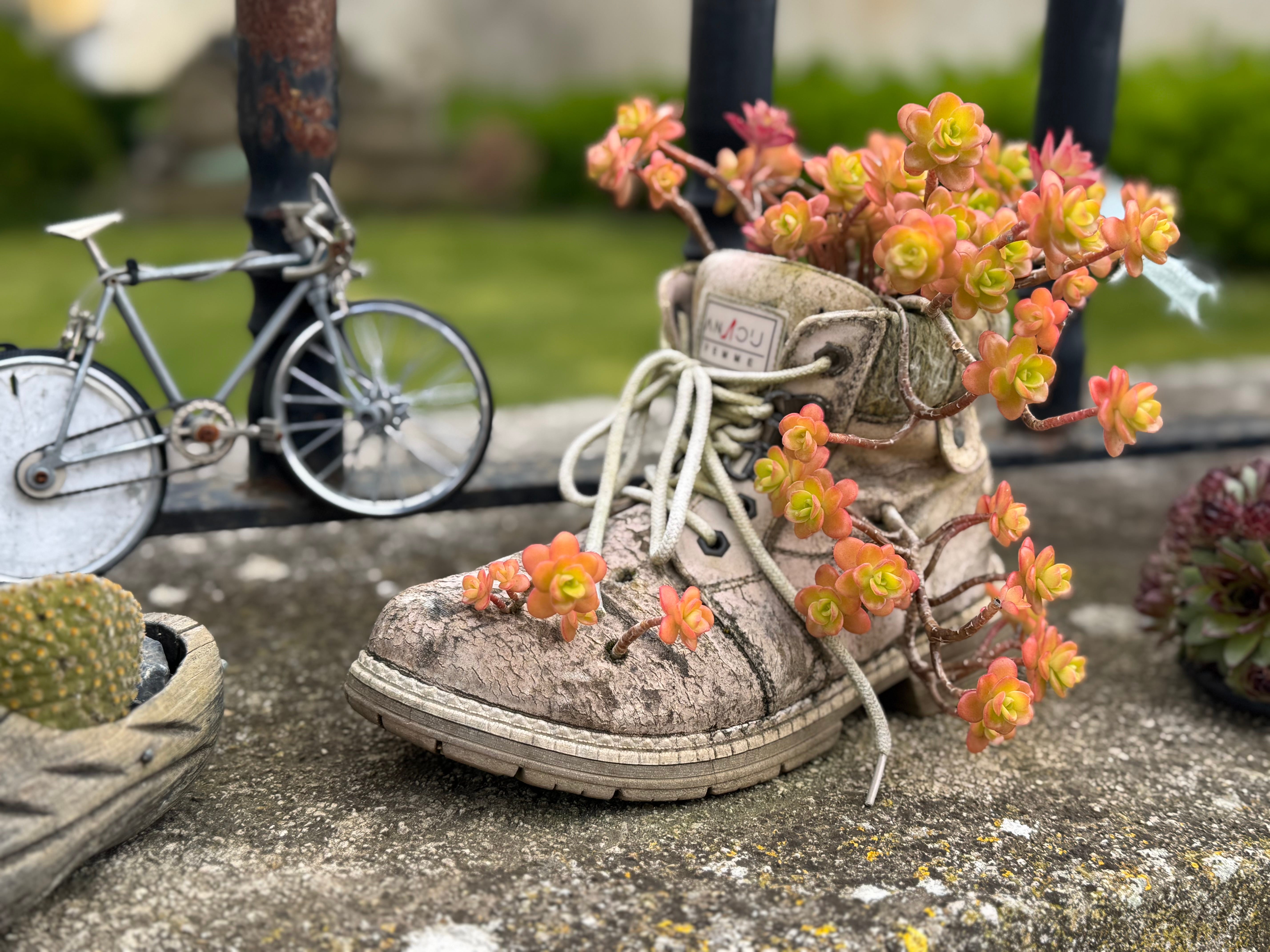
Along the low wall of a garden, someone had lined up a collection of discarded walking shoes.
Every one of them had clearly walked many kilometres. The soles were worn smooth, the fabric faded and torn. Yet instead of throwing them away, someone had filled each shoe with soil and planted flowers and small cacti inside.
It was such a simple idea.
Shoes that had reached the end of one journey had begun another.
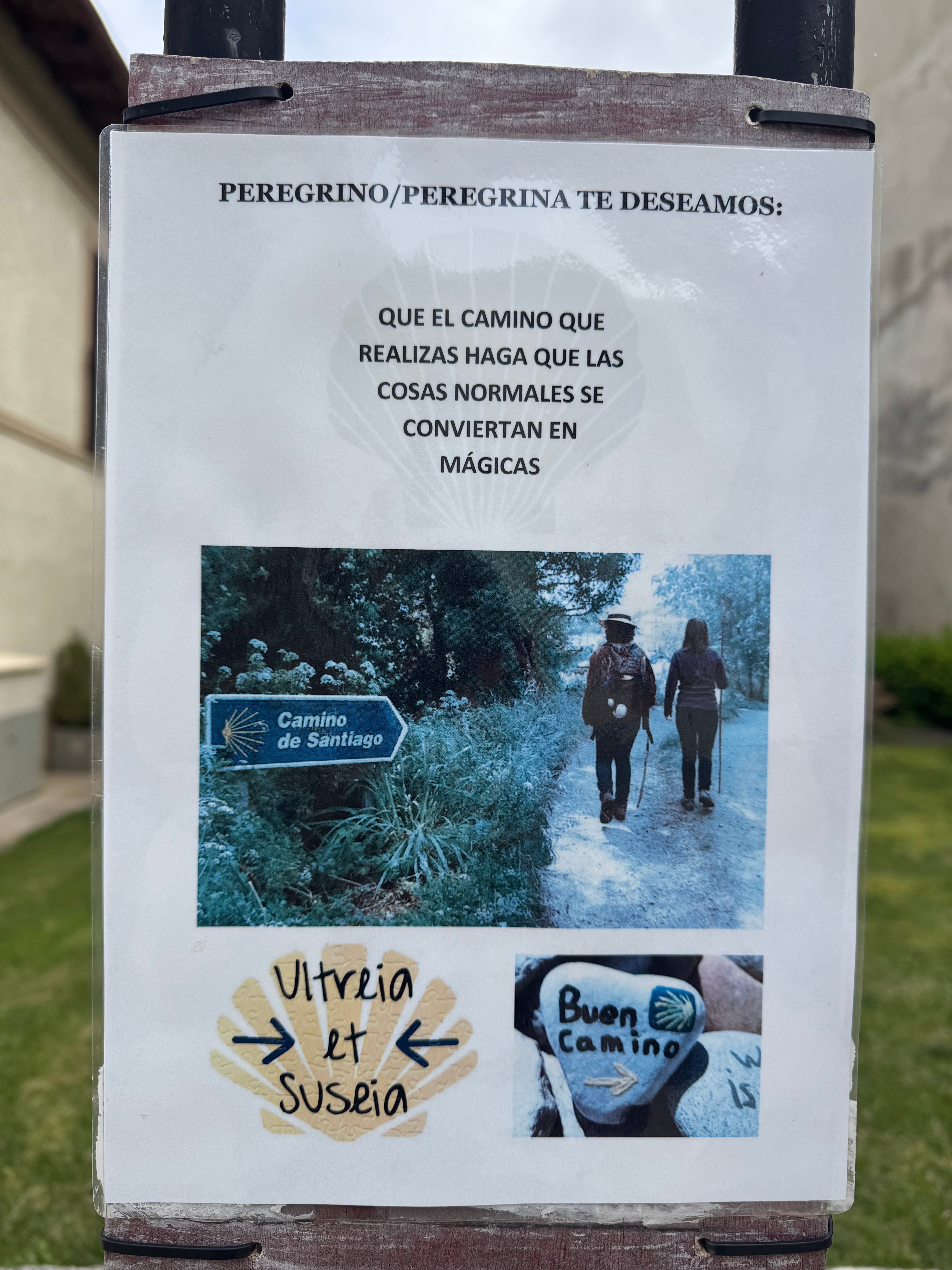
Above the display hung a laminated sign.
“Peregrino, peregrina, te deseamos: que el camino que realizas haga que las cosas normales se conviertan en mágicas.”
“Pilgrim, we hope that the Camino you are walking will transform ordinary things into something magical.”
Wasn’t that what the Camino had been doing to me all along?
It wasn’t changing the world around me.
It was changing the way I looked at it.
A pair of worn-out walking shoes became a tiny garden.
A conversation with a stranger became a story worth carrying home.
At the bottom of the sign I noticed another phrase that pilgrims have been greeting one another with for centuries:
Ultreia et Suseia.
The medieval words are difficult to translate exactly, but their meaning is clear enough.
Keep going.
Further.
Higher.
I looked down at my own shoes and smiled.“You’re not retiring as flowerpots just yet,” I told them. “We’ve still got a long way to go.”
Beyond Uterga, the Camino settled into an easy rhythm.
The hardest climb of the day was behind me. The path rose and fell gently through the farmland, and for long stretches I had the road almost entirely to myself. Every now and then another pilgrim appeared on the horizon before disappearing around the next bend. Muruzábal slipped by almost unnoticed. As its last houses faded behind me, the clouds finally began to break apart, and the afternoon sun brought the fields to life.
As I approached Obanos, I heard the excited chatter of half a dozen young French pilgrims, all in their twenties, walking in front of me. I couldn’t help thinking how quickly the Camino creates a sense of community.
Only a few days earlier, they had probably never met.
Now they looked like lifelong friends.As I followed them into the town, I noticed a large poster that had been fastened to a roadside pole.
It announced the village’s annual open-air performance of The Mystery of Saint Guillén and Saint Felicia.
According to the poster, it was a story of repentance, forgiveness and solidarity, values that had shaped the Camino for centuries.
I was intrigued.
What kind of story had become so important that the entire village still performed it every year?
I followed a street that climbed gently towards the village square.
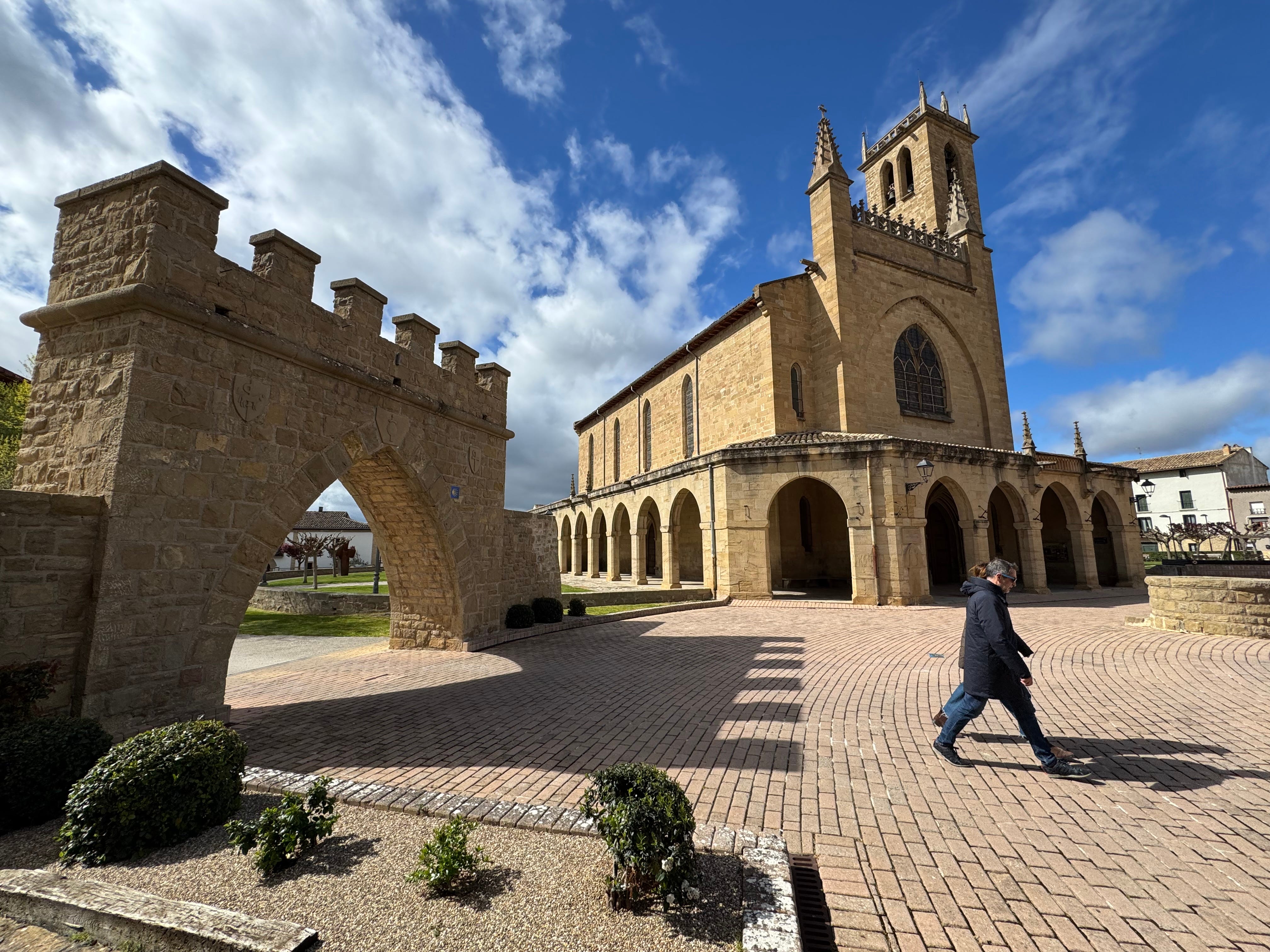
The space opened unexpectedly. In front of me stood the church of San Juan Bautista, its warm honey-coloured stone glowing softly in the afternoon sun. Two shallow arches sheltered the Romanesque doorway, casting a welcome strip of shade across the entrance.
I sat down beneath the porch to rest my legs.
To the left of the church stood an old stone gateway, its squat arch crowned with weathered blocks that hinted at a much older fortification. In the centre of the square, directly opposite the church, a low circular well rose from the paving stones, its rim polished smooth by centuries of hands drawing water.
It was an ordinary afternoon. A handful of pilgrims crossed the square. The young French group had settled into the little park beside the church, laughing over their picnic as though they had known one another for years.
Looking around, nothing suggested that this peaceful place had become the setting for one of the Camino’s most dramatic legends.
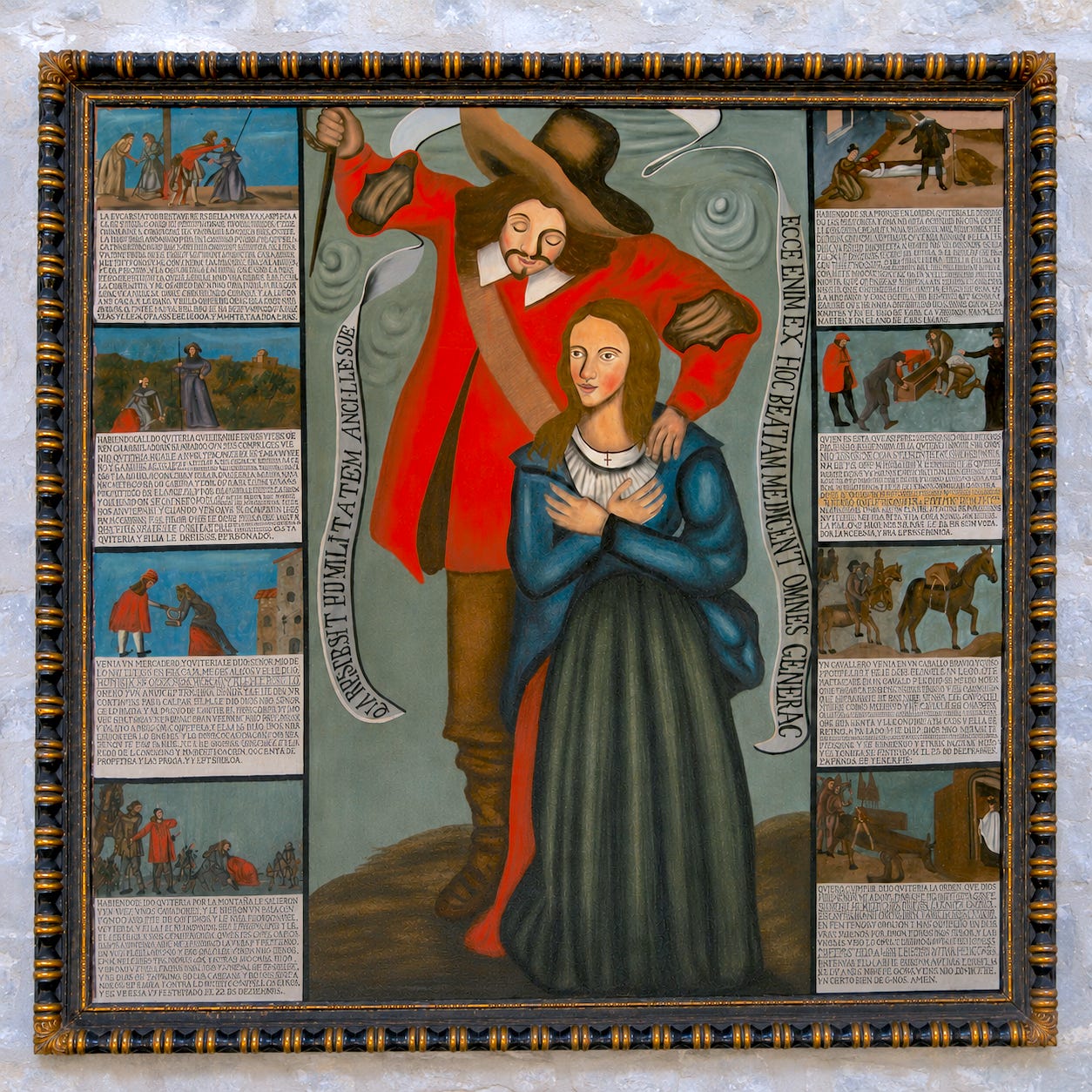
The legend begins far from Navarre.
Felicia was said to be a noblewoman from Aquitaine, perhaps even the daughter of the Duke of Aquitaine. She possessed everything that medieval society considered desirable: wealth, status and a future already mapped out for her.
Then she walked the Camino.
Somewhere along the pilgrimage, something changed.
Instead of returning home, she crossed the Pyrenees once more and settled in this small village. Here she chose a very different life, caring for pilgrims, the sick and the poor.
Her family could not understand it.
Why would anyone abandon privilege for poverty?
Why throw away a life that others would envy?
Her father refused to accept her decision and sent her brother, Guillén, to bring her home.
As I sat beneath the old porch, I couldn’t help thinking about the Italian woman I had met that morning.
She too had spent years surrounded by people who expected her life to follow a certain course.
Felicia faced something far harsher.
When Guillén finally found his sister, he ordered her to return with him.
She refused.
Not because she had stopped loving her family.
Because she knew she could no longer live the life they had chosen for her.
The argument grew more heated.
Then, in a moment of blind rage, Guillén drew his dagger and struck her down.
According to the legend, Felicia’s final words were not words of accusation.
She forgave him.
Overcome with remorse, Guillén fled. He eventually joined the pilgrimage to Santiago as an act of penance. When he returned, he came back to Obanos, not as the proud nobleman who had ridden here to force his sister home, but as a hermit. He spent the rest of his life in prayer and repentance, and in time the villagers began to honor both brother and sister as saints.
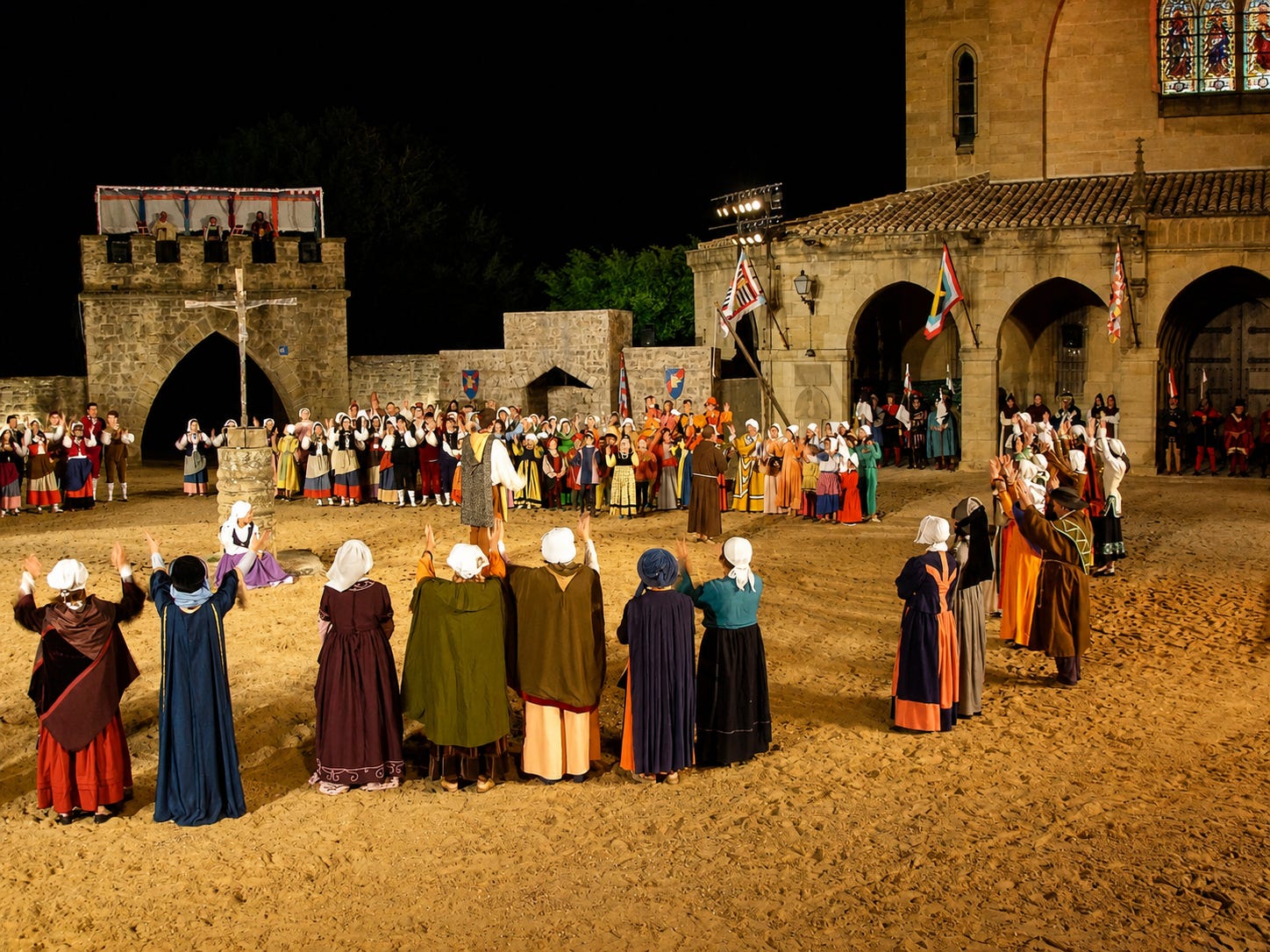
I remained beneath the porch for a while, watching life unfold in the square.
The French pilgrims were still laughing over their picnic. Other walkers crossed the square, glanced at the church, then continued towards Puente la Reina, just as pilgrims had done for centuries.
It would have been easy to pass through Obanos without ever discovering why this village still gathers each year to tell the story of Felicia and Guillén.
My thoughts returned to the Italian woman I had met on the descent from the Alto del Perdón.
It had taken her seventy years to claim this journey as her own.
Felicia had been given no such time.
Yet both had reached the same moment.
There came a point when someone else could no longer choose the road for them.
I looked once more across the square.
The legend had survived because each generation had chosen to tell it again.
Not to remember a murder.
But to remember a choice.
Beautifully written.