
The Missing Button
Day 22 of Inktober began with a missing button. I didn’t know where it was going—just followed the thread. It led somewhere I didn’t expect: a quiet love story stitched with memory and loss.

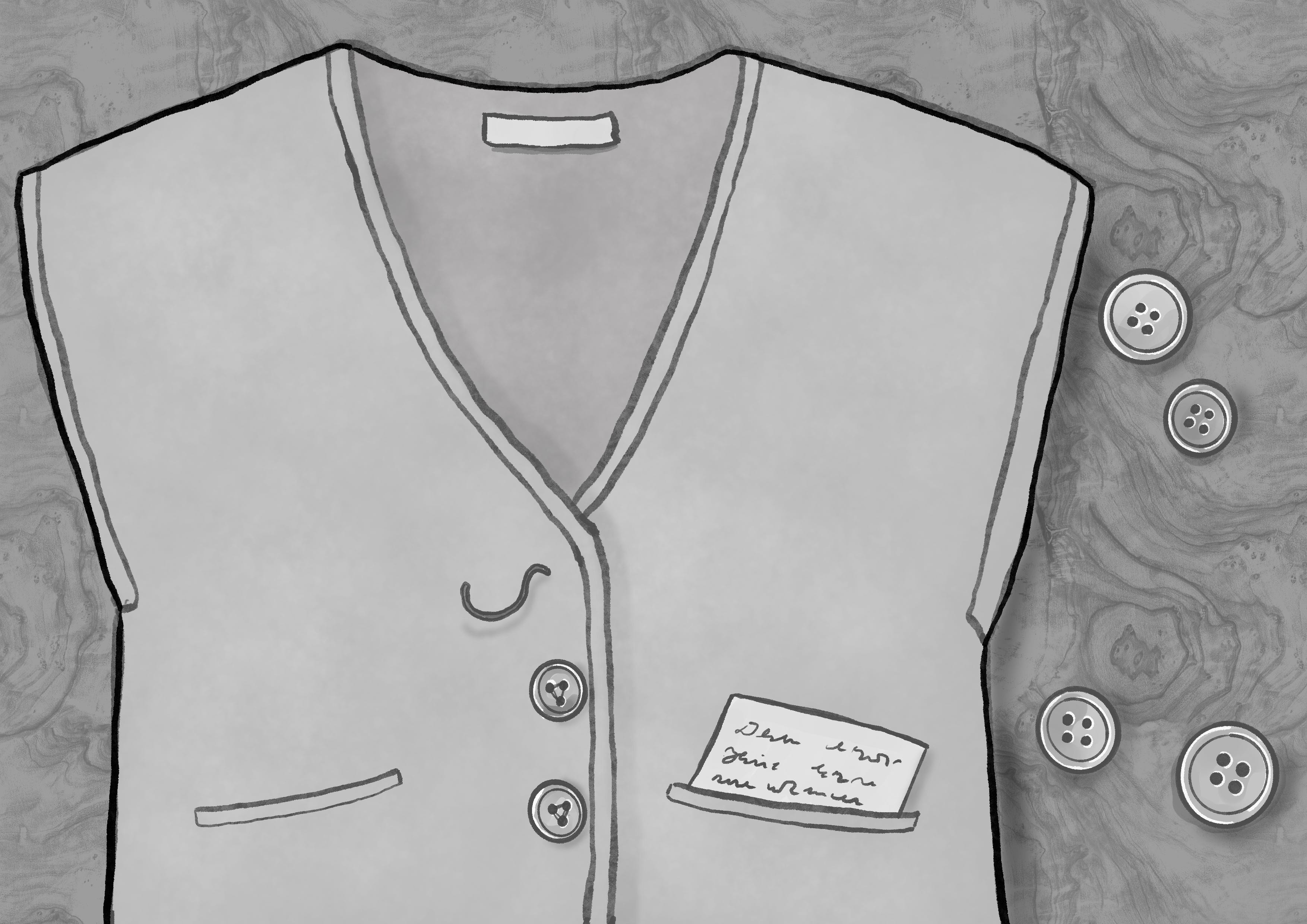
Marit tugged her favorite woolen vest off its hanger, the one she always wore on cold days—the one he used to love.
She slipped it over her shoulders and frowned.
A button was missing. The one right over her heart.
She crouched by her sewing tin, its clatter echoing in her small apartment like a whisper. Decades of crafting had given her a rainbow collection of buttons. But none matched. Too small, too big, too shiny, too dull. Not brass. Not this button.
Replacing it with another would ruin the look. Shuffling the other buttons would leave a scar—an empty thread-hole where something used to be.
She sighed.
And remembered.
She’d bought the vest at a small shop on the edge of town. It had smelled like wool, dust, and something faintly herbal—maybe soap, or old drawers. She hadn’t thought about the place in years. Maybe they still had spare buttons.
The Search Begins
The shop still stood, nestled between the bakery and the bookstore. But it smelled different now—clean wood, fresh paint, a faint trace of lemon oil. Not how she remembered it.
The saleswoman squinted at the vest. “We used to stock this, years ago. Came from a trade shipment, overseas. Don’t think we work with them anymore.”
Marit’s voice caught. “Do you remember who else bought one?”
The woman frowned. “We don’t share customer info.” Then, after a pause: “But if you see someone wearing one, maybe ask them?”
So Marit watched.
Church pews became scouting grounds. Office meetings turned into reconnaissance. Her eyes scanned crowds, cafés, passing buses. She walked unfamiliar streets, chasing strangers in familiar patterns. People started asking if she was okay.
She wasn’t.
She was missing something.
The Woman in Blue
One cold Thursday, she saw her.
An elderly Chinese woman on the tram, wearing the same pattern. Different color. Blue. But the buttons—almost identical.
Marit approached, hesitant. “Excuse me… your vest—could I see the buttons?”
The woman blinked. Then smiled. “Oh! Of course.” She opened her coat. Same buttons. Different shade.
Marit bit her lip. “Do you remember where it came from?”
“It was a gift. My grandchildren. From my visit to China. Northern town.”
She wrote down their address. “Write to them,” she said. “They’re sweet kids. They might remember.”
Marit did.
Weeks passed.
The reply came—not from the grandchildren, but from the director of the old textile factory where the vests had been made.
His letter was formal, but kind. He didn’t know if the button supplier was still around, but included an address.
Somewhere in northern China.
The Journey
She called it a vacation.
But her suitcase held no guidebooks. Only a photo of the vest and a note with the factory’s name.
She wandered through cities and trains and transfer stations, deeper into rural towns that blinked past like dreams. Her phone buzzed with her boss’s increasingly sharp messages. She replied with vague excuses and promises.
Finally, she reached the village.
A rusted gate. A crumbling sign. The button factory had long shut down. Locals spoke of the owner—kind man, recently passed. No one had claimed the place.
She broke in.
The Wardrobe
The dust coated everything like regret. Wooden drawers opened with a groan. Buttons of every kind, in bowls and boxes. But not hers.
Then, behind a broken loom, she saw it.
A wardrobe.
Inside: identical vests.
Her vests.
Dozens. Same pattern. Same fabric. Same size.
All missing the same button.
A shiver ran through her bones.
She reached into one vest’s pocket. A folded slip of paper.
Her handwriting.
Breath caught.
She opened it.
It was a note—one she remembered writing. Years ago. A thank-you to her mother, who’d gifted her the vest.
Another note. Written after she’d met Gene. A line about how he loved when she wore it, said it made her “look like winter poetry.”
Then, folded with care, a different hand.
His.
A note from their wedding day.
Scrawled in his steady, loving script:
“Thanks for helping me choose the jacket, love. Still not sure who looked better—me in this jacket or you in that vest. (It’s you. It’s always you.)”
Her fingers trembled.
The next note was hers again. Written while he was away on a business trip.
“I can’t wait to see your smile,” she’d written. “I’ll wear our favorite vest when you walk through the door.”
And then—
The torn one. Stained with tears.
He’d never made it home.
She’d worn the vest for his funeral.
And every anniversary since.
The Final Button
The light was fading fast. Shadows pooled in the corners like forgotten memories.
She rummaged through a drawer beneath a long-forgotten workbench and found a bundle of half-used candles. She lit two.
Their flames danced across the floor, casting long flickers over the wardrobe.
She turned to the final vest.
It looked like the others—same wool, same worn texture.
But her breath caught.
This one was whole.
The button. The button. It was there. Right where it should’ve been all along.
She stared, hardly trusting her eyes, and reached for it with shaking fingers. The brass gleamed softly in the candlelight, smooth and cold beneath her touch. Not a copy. Not a replacement.
The original.
And somehow, impossibly, it had waited for her.
Hands trembling, she put it on. Wool against skin, heavy with memory.
No note in the pocket.
She reached up.
Slid the button through the hole.
The wool gave a soft resistance—then held.
“Marit.”
She turned.
Gene stood there, in the candlelight.
“You found it,” he said.
She fell into his arms.
The Place Beyond
When she looked up, the factory was gone.
Candles burned around them—hundreds, thousands. A cathedral without walls. Stars glittered where the roof should be.
His old wedding jacket shimmered in the light.
A button was missing.
She smiled, reached into her pocket, and felt something round and solid.
“Think I found something that belongs to you,” she said, holding it up.
He laughed. And she kissed him.
The End.
So sweet! The ending definitely surprised me. It reminded me of the parable of the lost coin.